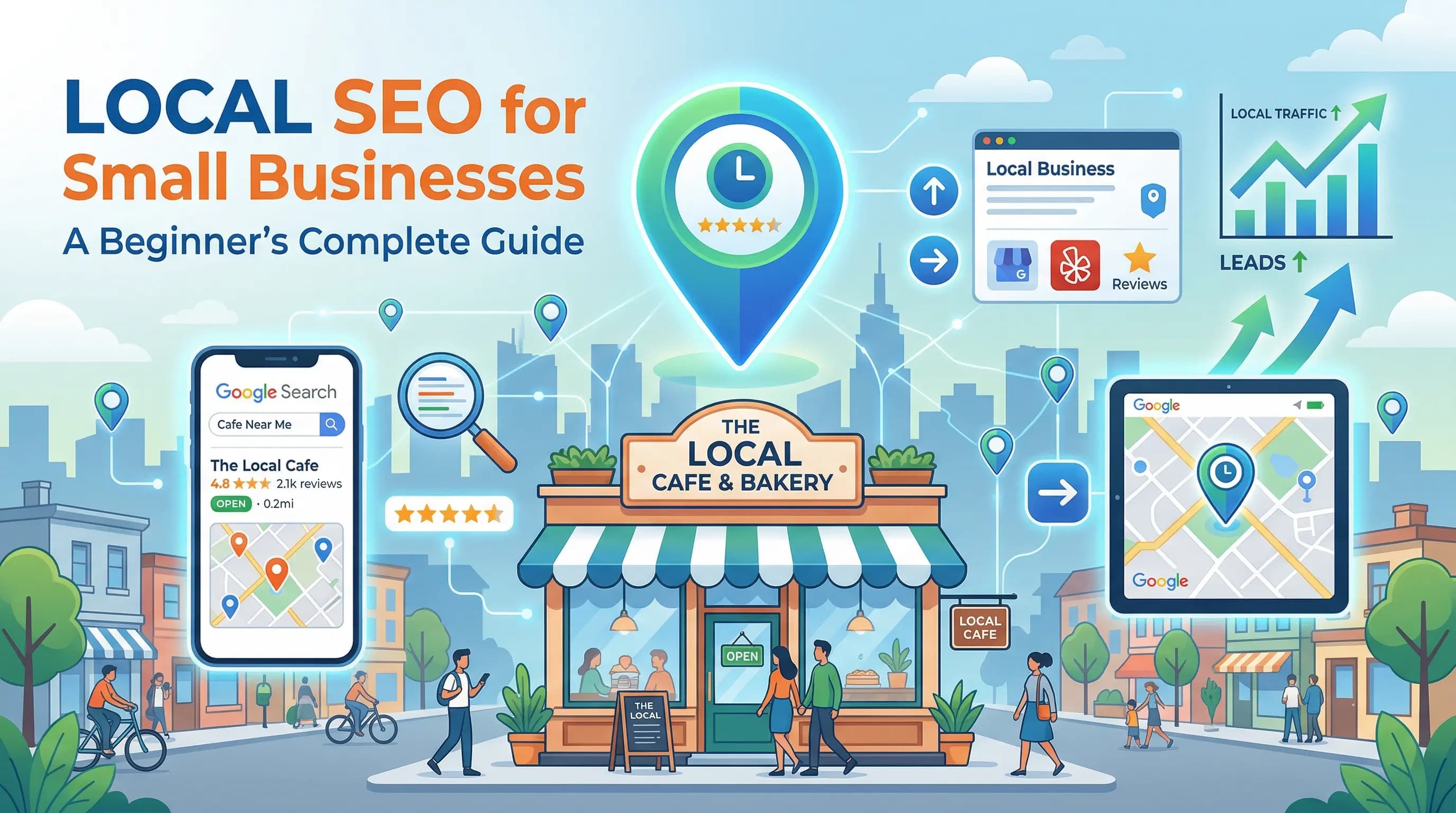
If you own a company serving local customers—such as a restaurant, salon, plumbing company, or law firm—local SEO for small business should be your top marketing priority. Local SEO optimizes your digital presence so nearby customers find you first. Consequently, when someone searches "dentist near me" or "best plumber in Houston" on Google, effective local search optimization decides which businesses rank at the top.
Fortunately, executing a successful local SEO guide does not require a massive advertising budget or marketing agency. By applying foundational steps, even a new small business can outrank established competitors in local search. Therefore, this complete beginner guide walks you through every actionable step to start ranking today.
What Is Local SEO and Why Does It Matter?
First, local SEO focuses specifically on improving visibility in geographic search queries. Unlike general SEO that targets national traffic, local SEO connects you with buyers in your immediate service area right when they need your help.
Whenever Google detects local search intent—such as "coffee shop near me" or "emergency electrician Chicago"—it displays a map section known as the Local Pack. Appearing in this top 3-map pack is extremely profitable because it shows your phone number, reviews, and address directly to customers. Consequently, optimizing for local search is how you secure those top map positions.
How Google Decides Who Ranks in Local Search
Furthermore, Google relies on three primary ranking factors to evaluate local businesses in search results. Understanding these core factors allows you to structure a winning local search for small business strategy.
How well your business listing matches the search query. Categories, services, and keywords define relevance.
How close your business location is to the searcher or the requested geographic area.
How established your brand appears online based on review volume, citations, and backlinks.
Step-by-Step Local SEO for Small Businesses
To succeed in local SEO, you need a structured strategy. Consequently, implementing the following core optimizations step-by-step will ensure maximum search visibility.
1. Claim and Optimize Google Business Profile
- Complete every field: Business name, category, operational hours, phone, website URL, and attributes all impact your rankings.
- Select the right primary category: Choose the most specific category possible—such as "Italian Restaurant" instead of generic "Restaurant".
- Add secondary categories: Include up to 9 secondary categories to capture additional related customer searches.
- Write a keyword-rich description: Describe your services and target city naturally without keyword stuffing.
- Upload high-resolution photos: Profiles displaying regular photos attract significantly more direction requests and phone calls.
- Publish regular updates: Share updates, special offers, and events regularly to signal business activity to Google.
- Enable direct messaging: Turn on instant messaging so prospective clients can contact you without friction.
2. Build Citations in Business Directories
- Google Business Profile: Your primary directory foundation.
- ListYourBusiness.us: A high-authority USA business directory; submit your free listing here.
- Yelp for Business: Essential for contractors, restaurants, and home services.
- Bing Places: Quick to configure by syncing directly with Google Business Profile.
- Apple Business Connect: Reaches Apple Maps and Siri voice search users on mobile.
- Facebook Page: Connects your business with local neighborhood groups and social search.
- Review our complete list of the best business listing sites in 2026 for top choices.
Critical rule: Your Name, Address, and Phone number (NAP) data must match identically across all web platforms. As explained in why NAP consistency matters for local rankings, fixing mismatched data is often the fastest way to boost local search rankings.
3. On-Page SEO for Local Websites
- Embed NAP in your website footer: Display exact contact details across every webpage.
- Build location landing pages: Create dedicated service pages if you operate across multiple cities or counties.
- Target local keywords: Include city names in page title tags, meta descriptions, and main headings.
- Add LocalBusiness Schema markup: Use structured data code to help search engine crawlers verify your contact details.
- Ensure fast mobile performance: Optimize load speeds because the majority of local searches happen on mobile devices.
4. Collect and Manage Customer Reviews
- Ask satisfied clients directly: Request a review immediately after delivering a successful service or job.
- Send automated text and email follow-ups: Share a direct review link so leaving feedback takes under two minutes.
- Reply to all customer reviews: Respond professionally to both positive and negative feedback as detailed in how to respond to negative reviews.
- Read our full strategy on how to get 5-star reviews to scale your strategy.
5. Local Content Marketing
- Publish blog posts covering local events or industry news in your city.
- Write city-specific guides, such as "How to Prepare Your Roof for Chicago Winters".
- Feature local customer case studies and project spotlights with client permission.
- Highlight local community involvement, charity work, or local event sponsorships.
6. Acquire Local Authority Backlinks
- Join your local Chamber of Commerce to earn a authoritative local backlink.
- Sponsor local youth sports teams, community events, or non-profit causes.
- Partner with non-competing local businesses for joint online marketing.
- Secure features or interviews in local news outlets and regional publications.
Common Local SEO Mistakes to Avoid
In addition, avoiding common optimization errors saves time and prevents search penalties. Watch out for these frequent mistakes:
Mismatched addresses or phone numbers confuse search engines and weaken citation authority. Keep formatting uniform everywhere.
Your primary category heavily influences search relevance. Research competitors to select the most accurate primary category available.
Failing to reply to reviews signals neglect to both Google and prospective customers. Always reply promptly to build social proof.
A non-responsive website turns away mobile visitors looking for immediate service. Test your site speed and layout on mobile devices regularly.
How Long Does Local SEO Take?
In conclusion, local SEO functions as a long-term compound growth engine. Most small businesses see noticeable traffic and lead improvements within 3 to 6 months of consistent effort.
As demonstrated in how listing your business drives real growth, investing in local optimization builds a durable competitive advantage. Furthermore, as shown in the benefits of listing a business in an online directory, building citations remains a proven method to secure lasting search rankings.
Start with the core steps today: optimize your Google Business Profile, build verified directory citations, ensure NAP consistency, and gather customer reviews. Follow our complete business listing checklist to verify that every profile element is optimized for success.
Start Building Your Local SEO Foundation Today
Create your free business listing on ListYourBusiness.us — build your local SEO foundation in under 10 minutes at zero cost.